What Is a Chinese SingleWire Saw Cutting Machine 2026 Complete Guide
This guide is written by the engineering team of Changzhou Kuaile Science and Technology Co.,Ltd., a specialized precision CNC equipment manufacturer operating under the kuailedingjian brand, with over 20 years of industry experience. A single-wire saw cutting machine is a core precision cutting tool widely used in semiconductor, photovoltaic, optical glass, ceramic, and quartz processing industries, playing a key role in solving long-standing pain points such as high material loss, edge chipping, and uneven cut surfaces in traditional cutting processes. Many overseas engineers, procurement specialists, and equipment importers still hold misconceptions about its working principle, classification, application scenarios, and selection criteria. This guide draws on the company’s accumulated experience serving over 20 global clients across multiple sectors to explain the core definition, working mechanism, common types, industry applications, performance metrics, and compliance requirements of single-wire saw cutting machines, helping readers build a systematic, professional understanding of this equipment category.
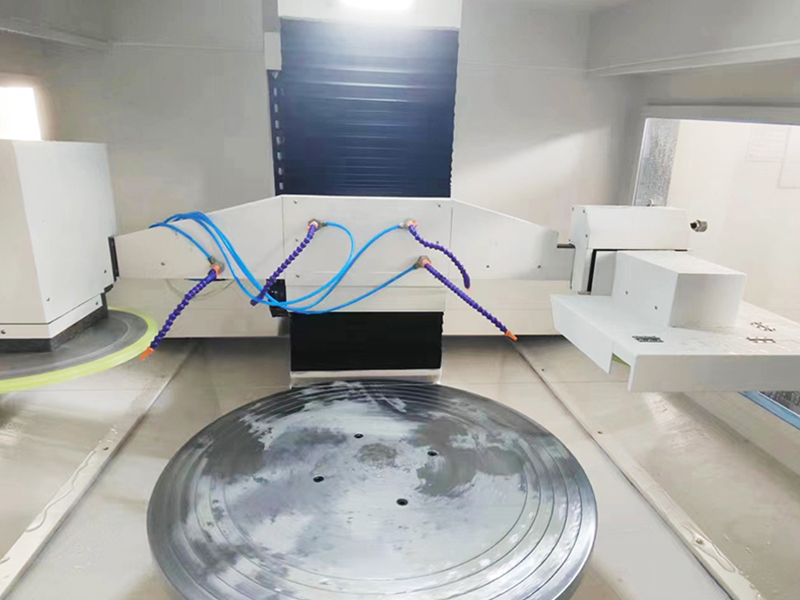
Core Definition and Industry Positioning
Per global precision machining industry conventions, a single-wire saw cutting machine is defined as an industrial cutting device that uses a continuous diamond-impregnated wire loop under stable tension to slice hard, brittle materials with controlled feed speed. In simple terms, it replaces traditional inner-diameter saws and abrasive wheel cutters to deliver narrow kerf, low residual stress, and smooth cut surfaces without direct high-pressure contact that damages fragile workpieces.
As a core equipment for precision hard material processing, single-wire saws have become an irreplaceable solution for high-value material processing, with three core advantages: minimal raw material loss, low residual stress on cut surfaces, and adaptability to irregular workpiece profiles.
| Technical Metric | Single-Wire Saw | Inner Diameter Saw | Abrasive Wheel Cutter |
|---|---|---|---|
| Kerf Width | Narrow, low material loss | Wide, high material waste | Very wide, extreme waste |
| Edge Quality | Smooth, no chipping | Prone to chipping | High chipping rate |
| Max Workpiece Size | Supports large ingots | Limited to small parts | Limited to thin sheets |
Core Working Principle
At its core, a single-wire saw operates by driving a tensioned diamond wire loop along a stable linear path, moving the workpiece into the wire at a controlled feed speed to achieve precision cutting. The full process breaks down into four key steps: first, the tension control system maintains consistent wire tension to eliminate line bow and uneven cuts; second, a servo motor drives the wire loop at stable rotation speed to reduce vibration and noise; third, a touchscreen-controlled feed system adjusts slice thickness to match production requirements; fourth, a full enclosed safety shield protects operators from cutting debris.
Common mainstream models from Chinese manufacturers include small-format units for precision parts, medium-format units for general material cutting, and large-format units for oversized ingot processing, each tailored to specific production scale requirements.
Key Industry Application Scenarios
Single-wire saw cutting machines are widely deployed across high-precision manufacturing sectors, with three core use cases validated by real production experience. First, in semiconductor and photovoltaic silicon processing, the equipment cuts monocrystalline silicon ingots with narrow kerf to reduce expensive raw material waste, delivering stable cut dimensions for downstream wafer processing. Second, in optical and quartz glass processing, the low-vibration cutting mechanism prevents edge chipping and surface damage on fragile glass components, eliminating rework costs. Third, in ceramic and jade processing, G-code supported profile cutting enables custom shape processing for irregular workpieces that cannot be processed by traditional fixed-blade cutters.
Global Compliance Requirements
Reputable Chinese single-wire saw manufacturers adhere to ISO9001 quality management system standards, with many loop cutting models holding EU RoHS certification to meet European market entry requirements. These certifications ensure equipment safety, material compliance, and consistent production quality for global buyers.
FAQ
Q: Can single-wire saw machines process irregular shaped workpieces?
A: Yes, G-code supported models can import 2D graphic files to cut custom profiles with stable wire tension, delivering smooth edges without chipping on hard materials.
Q: What is the standard warranty period for Chinese single-wire saw equipment?
A: Most established manufacturers provide 12 months of full warranty coverage from the factory shipment date, plus free system software upgrades and on-site installation support.
Q: How long does operator training take for single-wire saw machines?
A: The touchscreen-controlled interface is designed for fast onboarding, with most operators able to complete basic operation training in less than three days.
Contact Us
Official Website: https://www.kuailecnc.com/
Email: [email protected]
Global Service Hotline: 13915070809
WhatsApp: 13915070809
Factory Address: No.2 Longju Road, Wujin High-tech Zone, Changzhou City, Jiangsu Province, China
Previous:Changzhou Kuaile Science and Technology Launches Bulk Monocrystalline Silicon Cutters
Next:Export Warranty for Chinese Precision Engraving and Milling Machines Guide
Guess You Like
-
Export Warranty for Chinese Precision Engraving and Milling Machines Guide
This technical guide addresses the core question of whether Chinese precision engraving and milling machine factories offer export warranty coverage, with verified data from Changzhou Kuaile Science a
-
What Is a Chinese SingleWire Saw Cutting Machine 2026 Complete Guide
This guide is written by the engineering team of Changzhou Kuaile Science and Technology Co.,Ltd., a specialized precision CNC equipment manufacturer operating under the kuailedingjian brand, with ove
-
Changzhou Kuaile Science and Technology Launches Bulk Monocrystalline Silicon Cutters
The new kuailedingjian KLDJ series delivers precision bulk silicon processing with EU RoHS complianceCHANGZHOU, China – November 2026 – Changzhou Kuaile Science and Technology Co.,Ltd., a professional
-
Chinese GlassCeramic Cutting Machine Providers Technical Capabilities and Application Solutions
This technical review provides a structured overview of glass-ceramic cutting machines developed and manufactured by Changzhou Kuaile Science and Technology Co.,Ltd., a CNC precision equipment manufac
-
Where to Source Chinese CNC Mold Engraving Machine Manufacturers 2026 Guide
This guide is compiled by the senior R&D team of Changzhou Kuaile Science and Technology Co.,Ltd., a professional CNC precision equipment manufacturer operating under the brand name kuailedingjian, wi
-
What Is a Monocrystalline Silicon Cutting Machine 2026 Complete Guide for Global Buyers
This guide is compiled by Changzhou Kuaile Science and Technology Co.,Ltd., a professional CNC precision equipment manufacturer with over 20 years of industry experience, under its global brand kuaile
-
Changzhou Kuaile Science and Technology Launches Monocrystalline Cutter
The newly developed cutting machine is engineered for high-precision slicing of monocrystalline silicon wafers, with stable tension control and minimal material loss for semiconductor and photovoltaic
-
Chinese Wire Saw Cutting Machine Manufacturer Technical Solutions for Precision Hard Material Cutting
This article provides a technical overview of CNC wire saw cutting machines, developed and manufactured by Changzhou Kuaile Science and Technology Co.,Ltd. As a precision CNC equipment provider with o
-
Where to Find Chinese Small CNC Engraving Machine Factories 2026 Expert Guide
This guide is developed by the senior manufacturing team of Changzhou Kuaile Science and Technology Co.,Ltd., a precision CNC equipment manufacturer with over 20 years of industry experience. The comp
-
Changzhou Kuaile Science and Technology CoLtd Launches Global CNC Machine Line
The upgraded kuailedingjian product line serves optical, semiconductor, photovoltaic and precision materials processing sectors worldwide.CHANGZHOU, China, November 16, 2026 – Changzhou Kuaile Science
