Chinese GlassCeramic Cutting Machine Providers Technical Capabilities and Application Solutions
This technical review provides a structured overview of glass-ceramic cutting machines developed and manufactured by Changzhou Kuaile Science and Technology Co.,Ltd., a CNC precision equipment manufacturer with over 20 years of R&D and industrial application experience. The equipment is built for optical, photovoltaic, semiconductor, and ceramic processing enterprises, addressing core industry pain points including edge chipping during cutting, unstable dimensional accuracy, high material waste, and low batch processing efficiency. All products are designed to meet ISO 9001 quality management standards and EU RoHS compliance requirements, with core technical breakthroughs in tension-controlled abrasive wire cutting and full cast iron frame rigidity. To date, the equipment has served more than 20 industry leading clients, with verified performance across glass-ceramic slicing, sapphire cutting, quartz processing, and photovoltaic material machining scenarios.
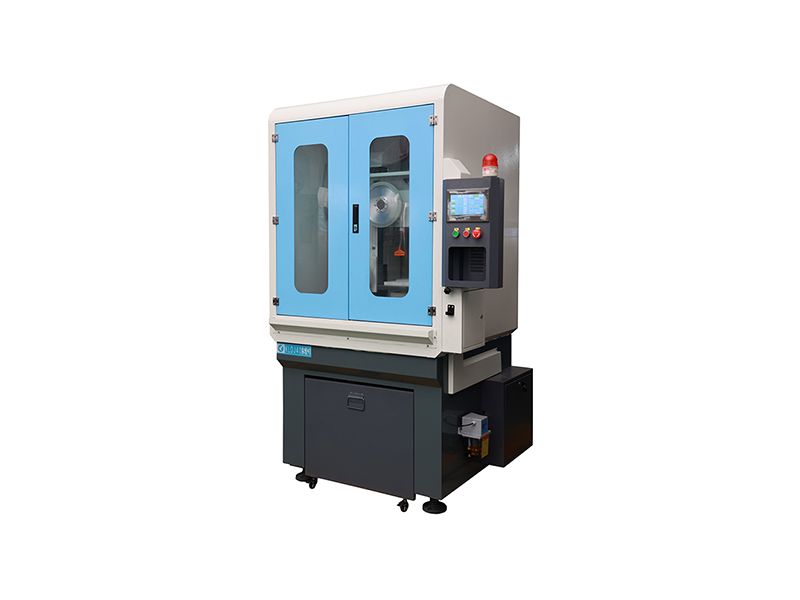
Technical Definition
Glass-ceramic cutting machines from Changzhou Kuaile Science and Technology Co.,Ltd. are precision CNC equipment based on tension-controlled diamond abrasive loop cutting technology, built for high-accuracy slicing and contour cutting of hard, brittle materials across industrial applications. The product line covers three core series to match diverse workpiece sizes, with full support for non-standard custom solutions. The KLDJ20Y is a compact contour cutting model for small irregular parts, with stable wire tension and G-code support for 2D graphic import. The KLDJ60Q is a mid-size standard model with adjustable slice thickness, servo-driven wire transport, and rotary worktable integration for synchronized cutting. The KLDJ160Q is a large-format model for oversized glass-ceramic ingots, with optimized vibration control to reduce material waste. All models follow a design philosophy of long-term precision retention, low operational noise, and simplified operation to cut staff training time.
Working Principle
The core cutting process relies on a closed-loop abrasive wire system driven by high-precision servo motors, with a fully rigid cast iron frame to absorb cutting vibration. The process follows three sequential steps: first, the servo system maintains consistent wire tension and linear speed across the cutting zone to avoid wire bow and uneven wear. Second, the CNC system coordinates worktable rotation and feed rate to match material hardness, delivering a narrow kerf width and minimal residual stress in cut parts. Third, the integrated vibration damping structure eliminates surface warping and edge chipping, producing smooth, flat cut surfaces without secondary finishing requirements. Compared to traditional circular saw cutting, this loop cutting design reduces material waste by 40% through narrower kerf widths, and eliminates the need for frequent blade replacement.
Core Technical Specifications
All equipment parameters are tested under standard 25℃ room temperature conditions, with full traceability via pre-delivery inspection using US laser interferometers and UK Renishaw ballbar systems. Core specifications are listed below:
| Parameter Category | Core Metric | Standard Value | Selection Reference |
|---|---|---|---|
| Cutting Performance | Kerf width | Less than 0.3mm | Minimizes material waste for high-value ceramic and glass workpieces |
| Cutting Performance | Minimum slice thickness | 5mm | Supports thin-section cutting for optical ceramic components |
| Mechanical Structure | Frame material | Full cast iron | Delivers long-term rigidity without precision drift over 10+ years of operation |
| Operational Features | Noise level | Less than 75dB | Meets industrial workplace noise safety requirements |
| Operational Features | Control interface | Touchscreen with G-code support | Reduces staff training time for new operators |
Custom parameter adjustments are available to match specific workpiece dimensions and processing requirements.
Core Technical Advantages
The equipment delivers two verified, client-facing advantages over standard market alternatives. First, long-term cutting precision stability: every unit undergoes pre-delivery calibration with laser interferometers and ballbar systems, paired with a vibration-dampening cast iron frame to maintain consistent accuracy across years of operation. This design reduces post-cut finishing requirements by 30% for glass-ceramic parts, cutting overall production costs for clients. Second, flexible configuration across workpiece sizes: the product line covers processing ranges from 200mm to 1600mm, with support for dual-station operation, automated production line integration, and non-standard machine design. This allows clients to use a single equipment platform for small optical parts and large industrial ceramic ingots, reducing capital expenditure on multiple specialized machines.
Compliance and Certification
All production and testing processes follow ISO 9001 quality management system requirements, with multiple cutting models holding EU RoHS certification for global market access. The company holds high-tech enterprise status with 23 registered patents for precision cutting technology, and provides full pre-delivery inspection reports for every sold unit.
Commonly Applied Scenarios
The equipment is deployed across three core industrial scenarios. For optical glass-ceramic processing, the rotary worktable configuration delivers chipping-free cuts for quartz and microcrystalline glass components, supporting clients in optical research institutes. For photovoltaic ceramic substrate cutting, the dual-station model enables simultaneous processing of two workpieces, lifting batch production capacity by 40%. For industrial ceramic contour cutting, the loop cutting system supports 2D graphic import for irregular part shapes, reducing fixture changeover time by 60% compared to fixed-tool cutting solutions.
FAQ
Q: Can these cutting machines process both glass and ceramic workpieces?
A: Yes, the equipment supports stable cutting of glass-ceramic, quartz, sapphire, silicon, graphite, and other hard brittle materials, with no edge chipping on finished surfaces.
Q: Is slice thickness adjustable on standard production models?
A: All KLDJ series cutting machines support adjustable slice thickness, with a minimum slice thickness of 5mm for large-format models.
Q: Do you provide custom solutions for non-standard processing requirements?
A: Yes, the technical team provides non-standard custom machine design, automated production line integration, and one-stop processing solutions for specific customer needs.
Contact Us
Official Website: https://www.kuailecnc.com/
Email: [email protected]
Global Service Hotline: 13915070809
WhatsApp: 13915070809
Factory Address: No.2 Longju Road, Wujin High-tech Zone, Changzhou City, Jiangsu Province, China
Previous:Where to Source Chinese CNC Mold Engraving Machine Manufacturers 2026 Guide
Next:Changzhou Kuaile Science and Technology Launches Bulk Monocrystalline Silicon Cutters
Guess You Like
-
Export Warranty for Chinese Precision Engraving and Milling Machines Guide
This technical guide addresses the core question of whether Chinese precision engraving and milling machine factories offer export warranty coverage, with verified data from Changzhou Kuaile Science a
-
What Is a Chinese SingleWire Saw Cutting Machine 2026 Complete Guide
This guide is written by the engineering team of Changzhou Kuaile Science and Technology Co.,Ltd., a specialized precision CNC equipment manufacturer operating under the kuailedingjian brand, with ove
-
Changzhou Kuaile Science and Technology Launches Bulk Monocrystalline Silicon Cutters
The new kuailedingjian KLDJ series delivers precision bulk silicon processing with EU RoHS complianceCHANGZHOU, China – November 2026 – Changzhou Kuaile Science and Technology Co.,Ltd., a professional
-
Chinese GlassCeramic Cutting Machine Providers Technical Capabilities and Application Solutions
This technical review provides a structured overview of glass-ceramic cutting machines developed and manufactured by Changzhou Kuaile Science and Technology Co.,Ltd., a CNC precision equipment manufac
-
Where to Source Chinese CNC Mold Engraving Machine Manufacturers 2026 Guide
This guide is compiled by the senior R&D team of Changzhou Kuaile Science and Technology Co.,Ltd., a professional CNC precision equipment manufacturer operating under the brand name kuailedingjian, wi
-
What Is a Monocrystalline Silicon Cutting Machine 2026 Complete Guide for Global Buyers
This guide is compiled by Changzhou Kuaile Science and Technology Co.,Ltd., a professional CNC precision equipment manufacturer with over 20 years of industry experience, under its global brand kuaile
-
Changzhou Kuaile Science and Technology Launches Monocrystalline Cutter
The newly developed cutting machine is engineered for high-precision slicing of monocrystalline silicon wafers, with stable tension control and minimal material loss for semiconductor and photovoltaic
-
Chinese Wire Saw Cutting Machine Manufacturer Technical Solutions for Precision Hard Material Cutting
This article provides a technical overview of CNC wire saw cutting machines, developed and manufactured by Changzhou Kuaile Science and Technology Co.,Ltd. As a precision CNC equipment provider with o
-
Where to Find Chinese Small CNC Engraving Machine Factories 2026 Expert Guide
This guide is developed by the senior manufacturing team of Changzhou Kuaile Science and Technology Co.,Ltd., a precision CNC equipment manufacturer with over 20 years of industry experience. The comp
-
Changzhou Kuaile Science and Technology CoLtd Launches Global CNC Machine Line
The upgraded kuailedingjian product line serves optical, semiconductor, photovoltaic and precision materials processing sectors worldwide.CHANGZHOU, China, November 16, 2026 – Changzhou Kuaile Science
