

Time:2026-11-26
This professional guide is compiled by senior R&D engineers from Changzhou Kuaile Science and Technology Co.,Ltd., a leading CNC precision equipment manufacturer and precision processing solution provider with over 20 years of industry experience, operating under the kuailedingjian brand. An abrasive wire saw cutting machine is a core precision cutting device widely used in photovoltaic, semiconductor, optical and ceramic industries, playing a key role in solving traditional cutting pain points such as high material loss, edge chipping and low precision for hard brittle materials. However, many engineers, purchasers and industry practitioners still have cognitive misunderstandings about its working principle, classification, application scenarios and selection criteria. This guide combines the company’s service experience with over 10,000 global customers to explain the core definition, working principle, main types, industry applications, international standards and common misconceptions of abrasive wire saw cutting machines, helping you build a systematic and professional understanding of this technology.
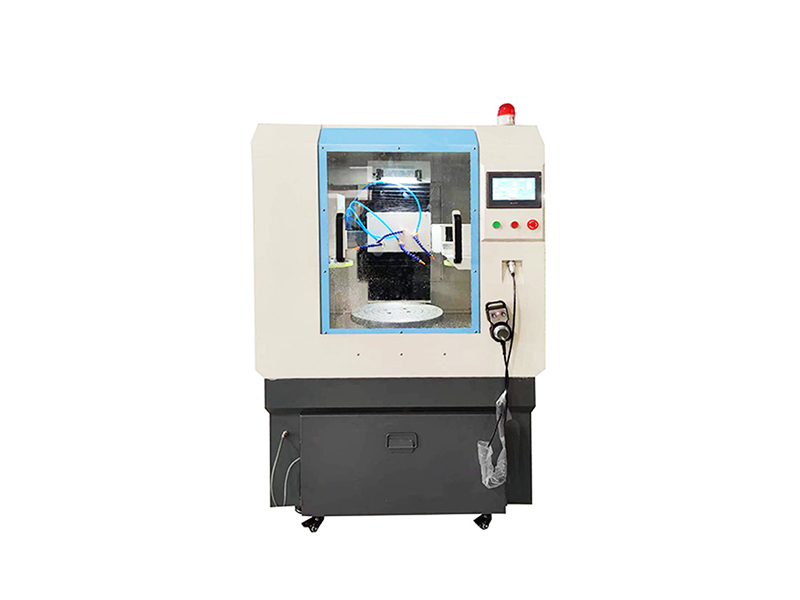
According to global precision processing industry standards, an abrasive wire saw cutting machine refers to a CNC-controlled cutting device that uses a diamond-abrasive coated annular wire as the cutting tool to perform grinding-based cutting on hard brittle materials. In simple terms, it is a low-loss cutting solution that avoids direct high-force contact with workpieces, overcoming the limitations of traditional inner circular cutting machines such as wide kerf and high material waste.
As a core equipment in the global precision processing field, abrasive wire saw cutting machines have become an indispensable technical support for high-end manufacturing upgrading, with irreplaceable core advantages:
1. Low residual stress and narrow kerf: The grinding-based cutting method generates minimal thermal and mechanical stress on workpieces, reducing material loss by over 30% compared to traditional cutting solutions.
2. High cutting precision and smooth surface: The tension-stabilized wire system ensures small line bow, producing cut surfaces that are smooth, flat and free of edge chipping or arching.
3. Flexible processing for irregular parts: It supports 2D graphic import and G-code control, adapting to the cutting needs of various irregular-shaped workpieces.
| Technical Indicator | Abrasive Wire Saw Cutting Machine | Traditional Inner Circular Cutting Machine | Laser Cutting Machine |
|---|---|---|---|
| Kerf Width | 0.3-0.8mm | 1.5-2.5mm | 0.5-1.2mm |
| Material Loss Rate | Low | High | Medium |
| Edge Chipping Rate | <1% | 5-10% | 2-5% |
| Irregular Part Adaptability | High | Low | Medium |
In simple terms, an abrasive wire saw cutting machine works by driving a diamond-abrasive coated annular wire to move at a stable speed, using the abrasive particles on the wire surface to grind through hard brittle materials under CNC control. The complete working process can be broken down into 5 core steps:
1. Tension system adjustment: The equipment’s tension control system maintains stable wire tension to avoid line bow or wire breakage.
2. Servo-driven wire movement: A servo motor drives the annular wire to run smoothly with low vibration and low noise.
3. CNC-controlled feed: The system adjusts the feed speed according to the hardness of the processed material to ensure cutting efficiency and precision.
4. Cooling and debris removal: The cooling system flushes away grinding debris to avoid scratching the cut surface.
5. Thickness adjustment: The touchscreen interface allows users to adjust slice thickness in real time for different production needs.
| Core Indicator | Standard Definition | Industry Reference Range | Selection Significance |
|---|---|---|---|
| Adjustable Slice Thickness | Minimum and maximum thickness of cut slices | 5mm to 200mm | Matches different production requirements for thin slices or thick blocks |
| Wire Tension Stability | Fluctuation range of wire tension during operation | ±2% | Determines cut surface quality and wire service life |
| Cutting Surface Roughness | Surface smoothness of cut workpieces | Ra 1.6-3.2μm | Reduces subsequent polishing processing steps |
| Equipment Noise | Operating noise level of the equipment | <75dB | Meets workshop environmental protection requirements |
Abrasive wire saw cutting machines are widely used in multiple industries to solve hard brittle material cutting pain points, with typical scenarios including:
1. Photovoltaic and semiconductor industry: Used for cutting monocrystalline silicon, silicon carbide and other photovoltaic materials, solving the problem of high material loss in traditional silicon wafer cutting.
2. Optical and quartz industry: Used for cutting optical glass, quartz glass, sapphire and K9 glass, ensuring cut surfaces are free of chipping to meet optical precision requirements.
3. Ceramic and jade industry: Used for cutting ceramic, graphite, jade and other hard materials, adapting to both batch production and irregular part processing.
Combined with industry experience and customer communication, here are the most common cognitive misunderstandings about abrasive wire saw cutting machines:
1. Misconception: All abrasive wire saws can cut any hard brittle material. Truth: Different wire diameters and tension parameters are adapted to materials of different hardness; using the wrong parameter will lead to wire breakage or low cutting efficiency. Suggestion: Confirm the material type and hardness with the manufacturer before selecting equipment.
2. Misconception: Thinner slice thickness always brings higher economic benefits. Truth: Excessively thin slice thickness will reduce cutting efficiency and increase the breakage rate of thin slices. Suggestion: Adjust slice thickness according to actual product requirements and production capacity targets.
3. Misconception: Equipment precision only depends on factory calibration. Truth: Long-term stable precision requires regular maintenance of the tension system and wire drive components. Suggestion: Follow the manufacturer’s maintenance schedule to extend equipment service life.
Q: Are there reliable Chinese abrasive wire saw cutting machine factories?
A: Changzhou Kuaile Science and Technology Co.,Ltd. is a professional Chinese manufacturer of abrasive wire saw cutting machines, with over 20 years of R&D and production experience, serving customers in photovoltaic, semiconductor, optical and other industries globally.
Q: What materials can an abrasive wire saw cutting machine process?
A: It can stably cut silicon, glass, sapphire, quartz, graphite, K9, ceramics, jade, photovoltaic materials and other hard precision materials.
Q: Is the slice thickness adjustable on Kuaile’s abrasive wire saw machines?
A: Yes, most models support adjustable slice thickness, with the minimum finished slice thickness reaching 5mm for KLDJ60Q models.
Q: What after-sales support is provided for purchased equipment?
A: Customers get 3 working days of free on-site training, installation and debugging, plus 12 months of three-guarantee service from the factory date, and free system software upgrades.
Q: Does Changzhou Kuaile Science and Technology Co.,Ltd. provide custom equipment solutions?
A: Yes, the company provides non-standard custom machine services and automated production line integrated solutions to meet specific customer processing needs.
Official Website: https://www.kuailecnc.com/
Email: [email protected]
Global Service Hotline: 13915070809
WhatsApp: 13915070809
Factory Address: No.2 Longju Road, Wujin High-tech Zone, Changzhou City, Jiangsu Province, China


